Launch offer — valid today only

📄 Digital book in PDF · read it on your phone or print it

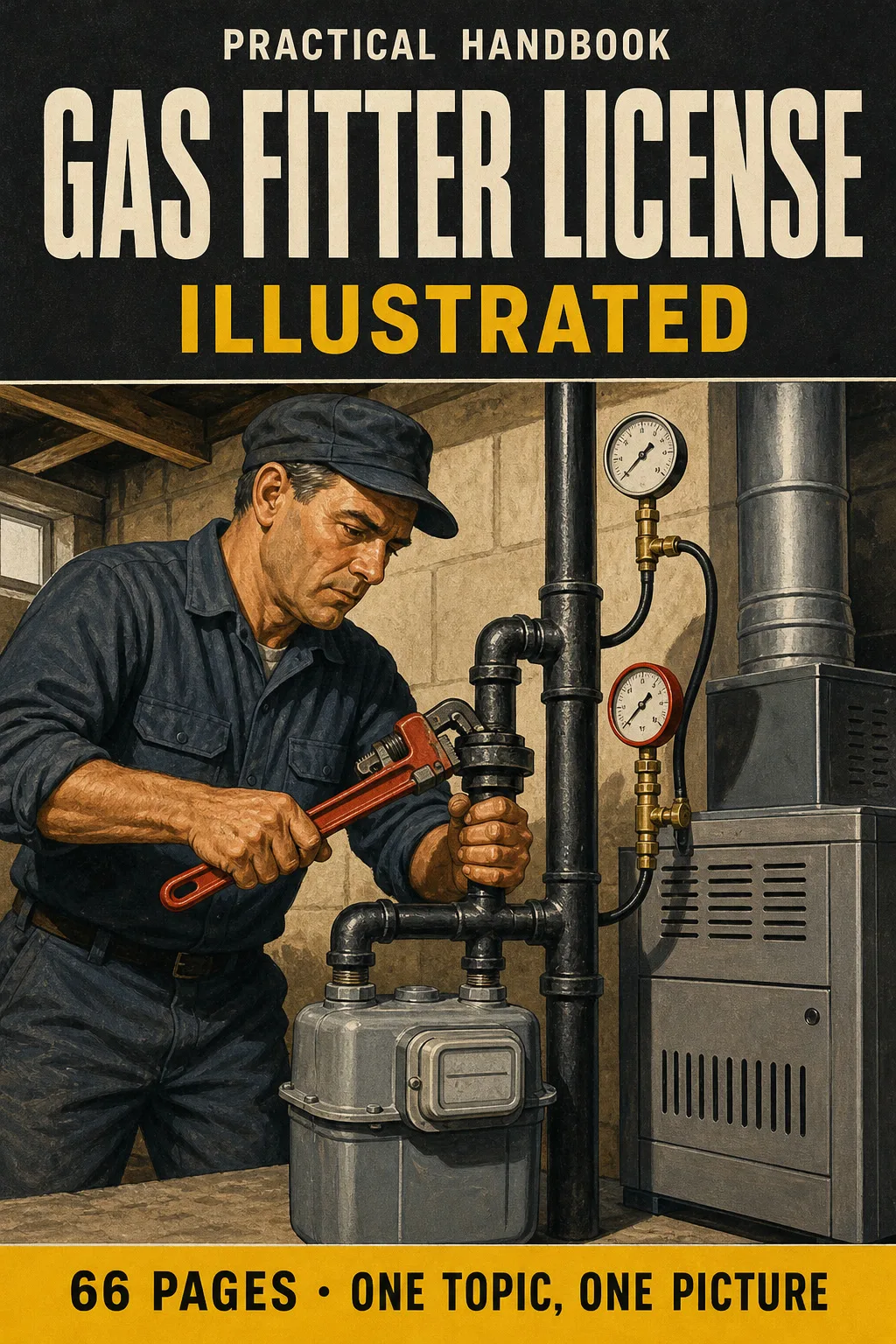
Gas Fitter License Illustrated: Gas Piping in Drawings Size, Vent and Test in the Same Steps Every Time

The meter-to-appliance route, pipe sizing tables, sediment traps, combustion air openings, Type B venting, pressure testing, CSST bonding and LP-gas tanks. Every topic gets its own page: the drawing first, then what you need to remember. 66 illustrated pages.

YES, I WANT THE ILLUSTRATED BOOK

🔒 Secure checkout · PDF by email · 30-day guarantee

Every topic, its own pageEach calculation drawn, with the explanation right beside it
66 illustrated pages9 parts, from the meter-to-appliance route to exam day
Up-to-date sourcesNFPA 54, NFPA 58 and the IFGC: the model codes most state gas exams are based on
PDF by emailFormat

Look Inside the Book

Every page has one big drawing and a box with the numbers and steps you need to know:

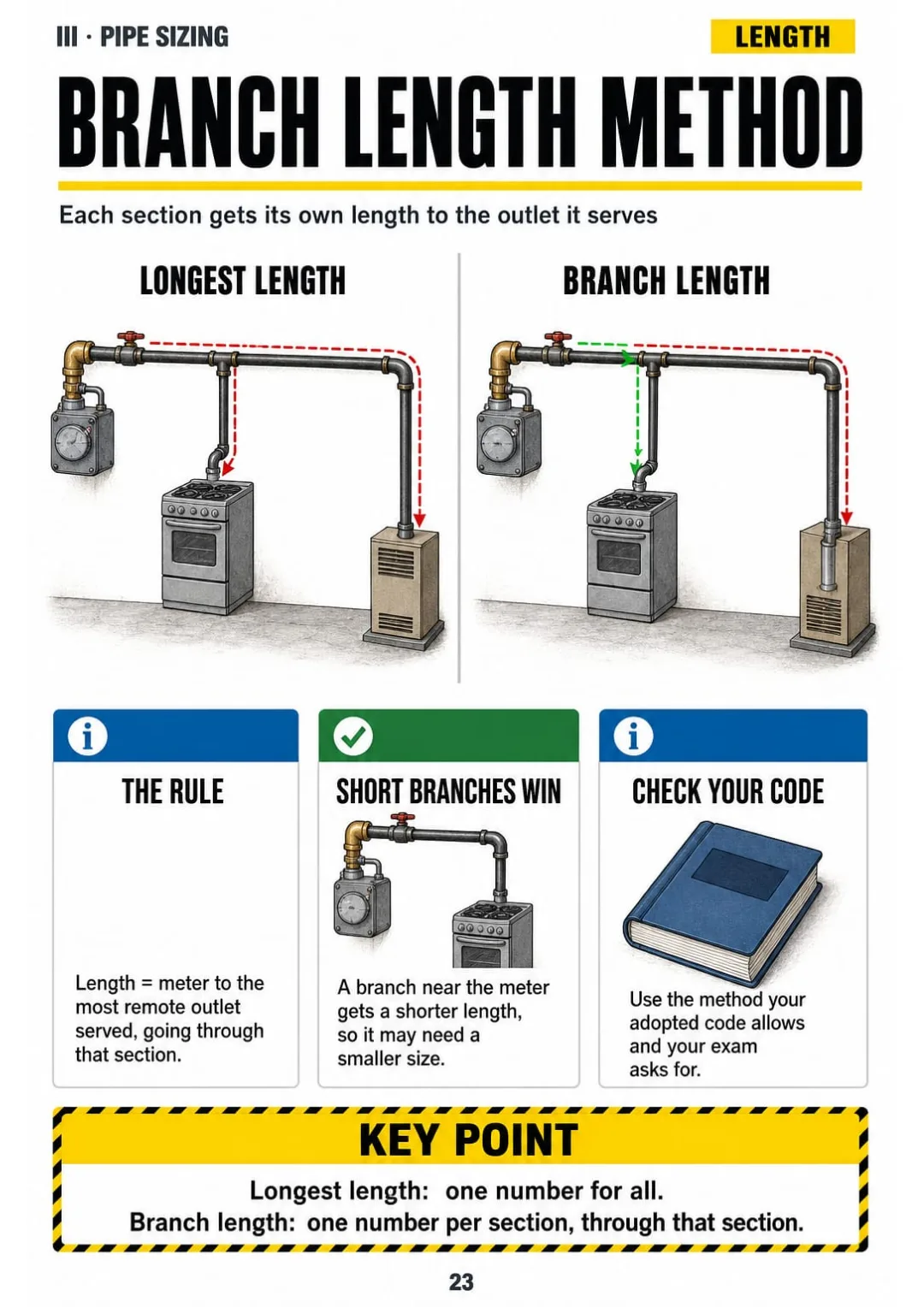
Branch length: meter to the most remote outlet each section serves, section by section.
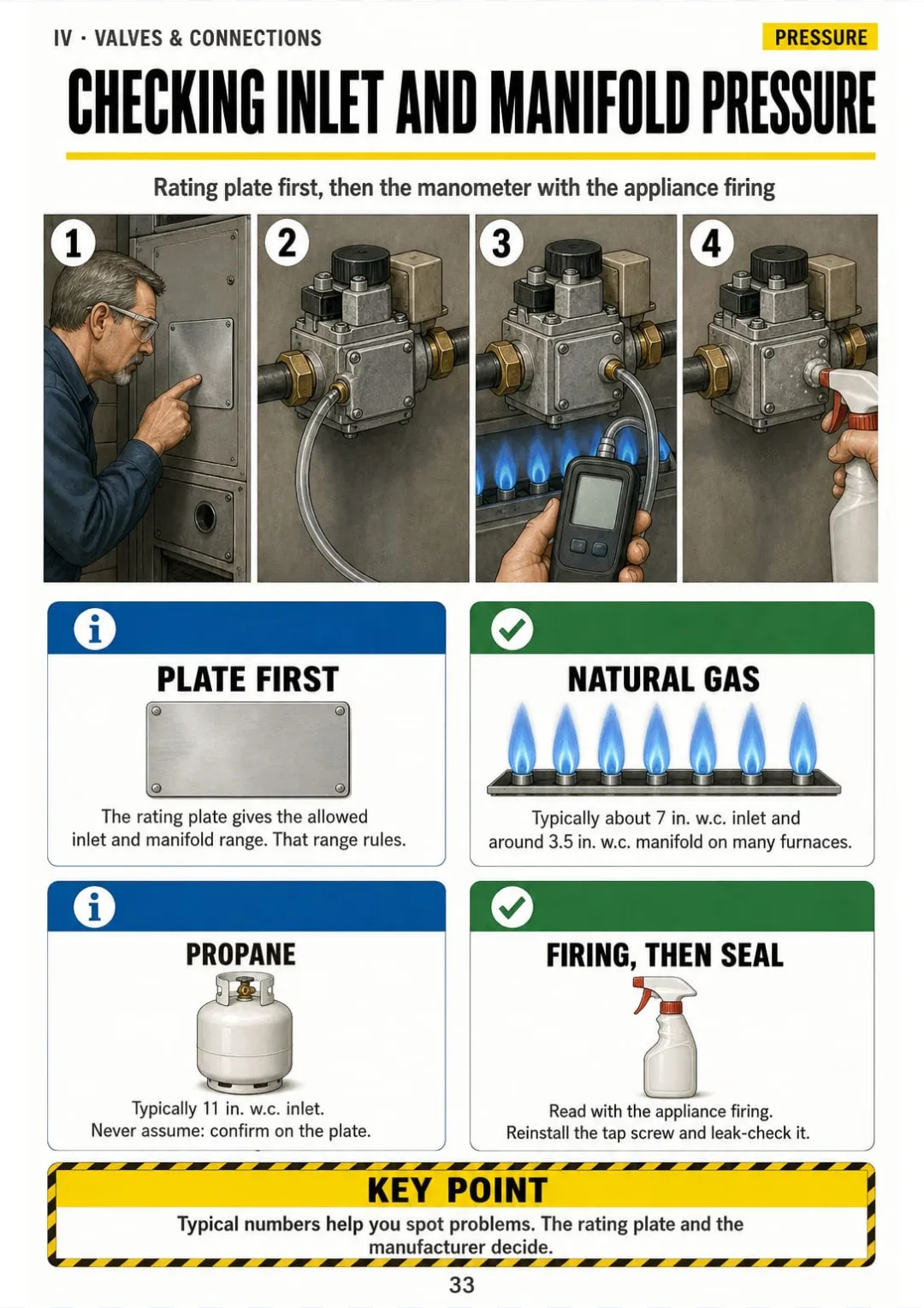
Pressure check: natural gas about 7 in. w.c. inlet, propane 11 in. w.c.; the rating plate rules.
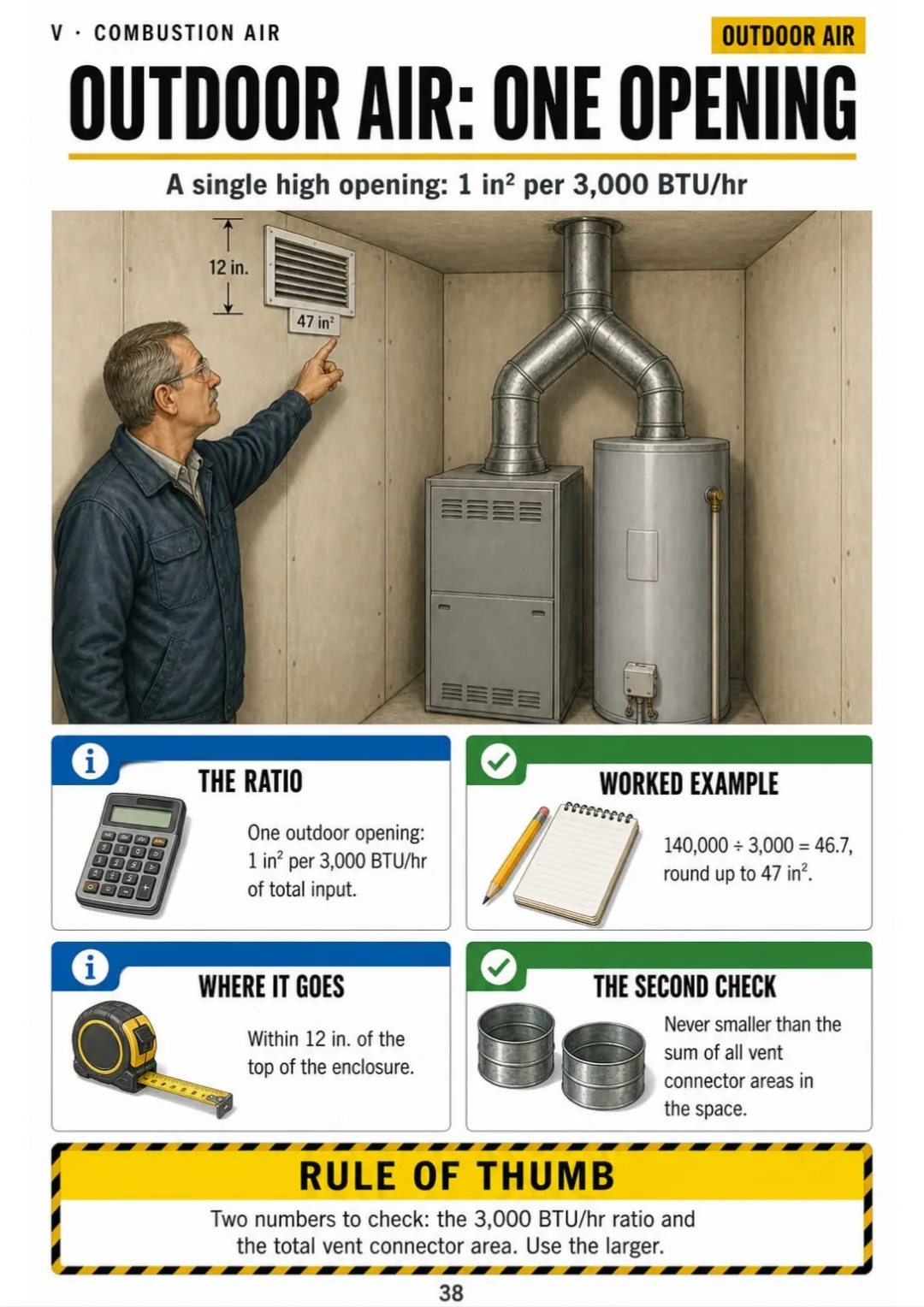
Single outdoor opening: 1 in² per 3,000 BTU/hr, within 12 in. of the top, not smaller than the connectors.
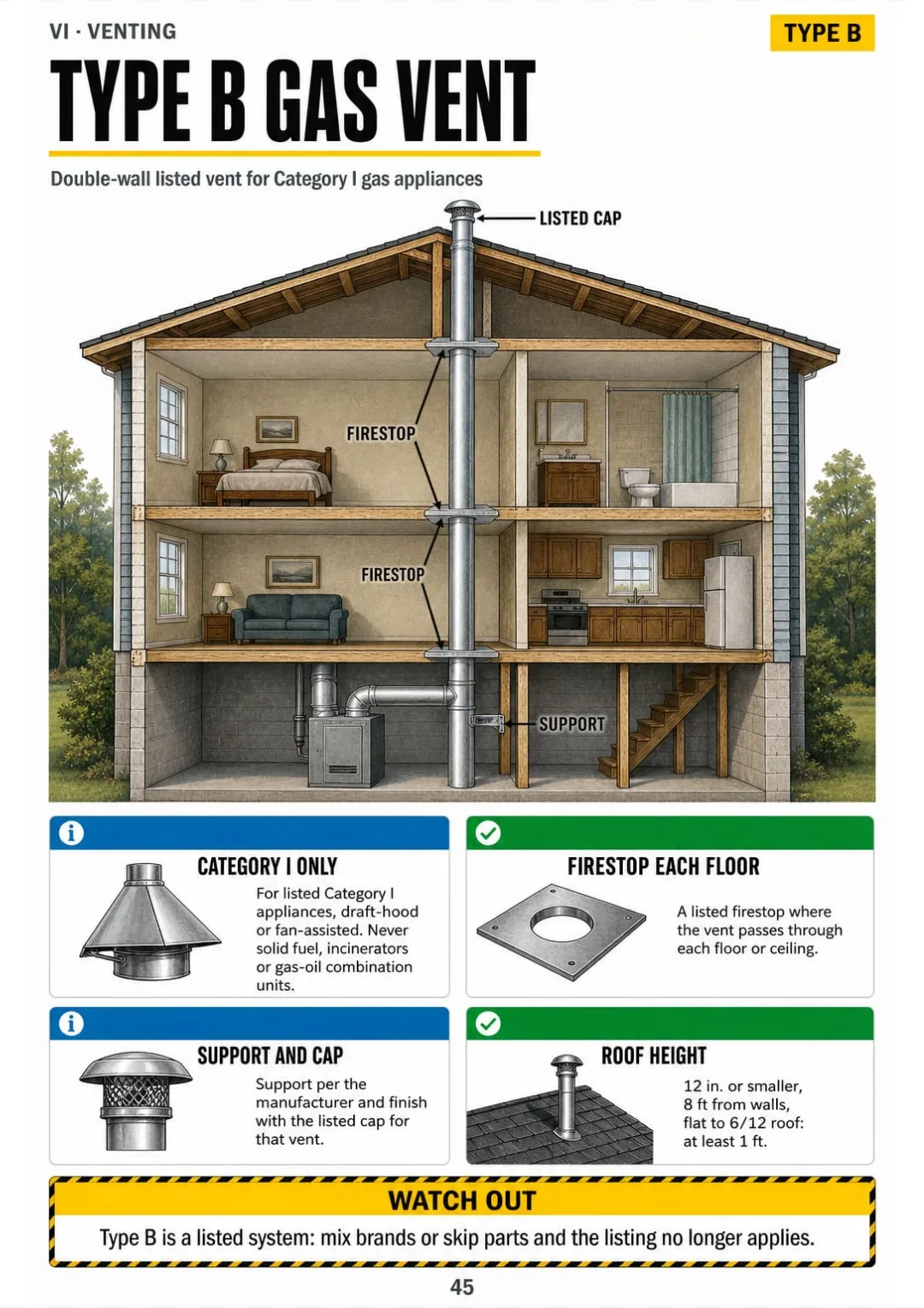
A Type B run from basement to roof, with firestops and listed cap
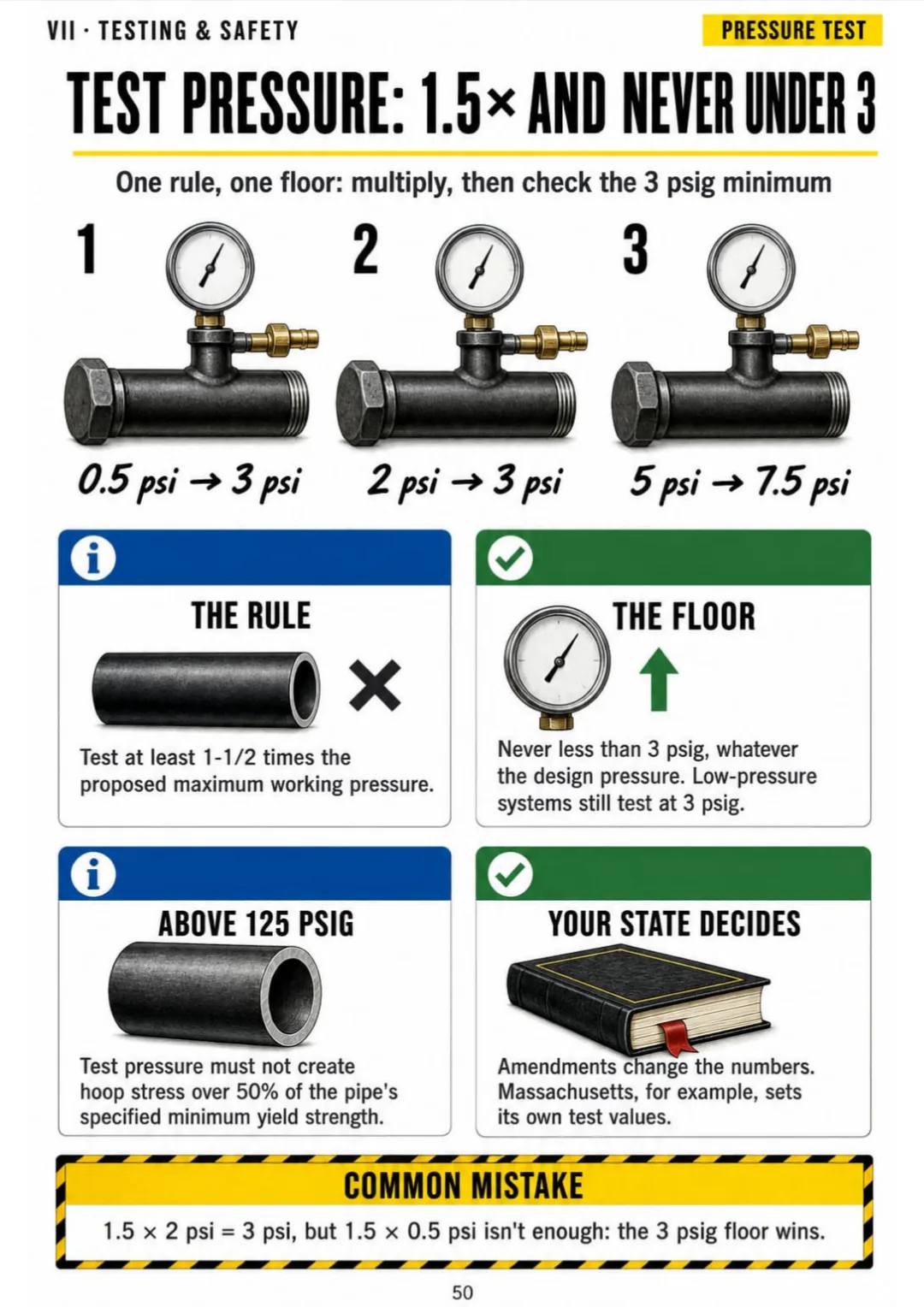
Test pressure: 1.5 × working pressure, never under 3 psig (IFGC 406.4.1 / NFPA 54 8.1.4)
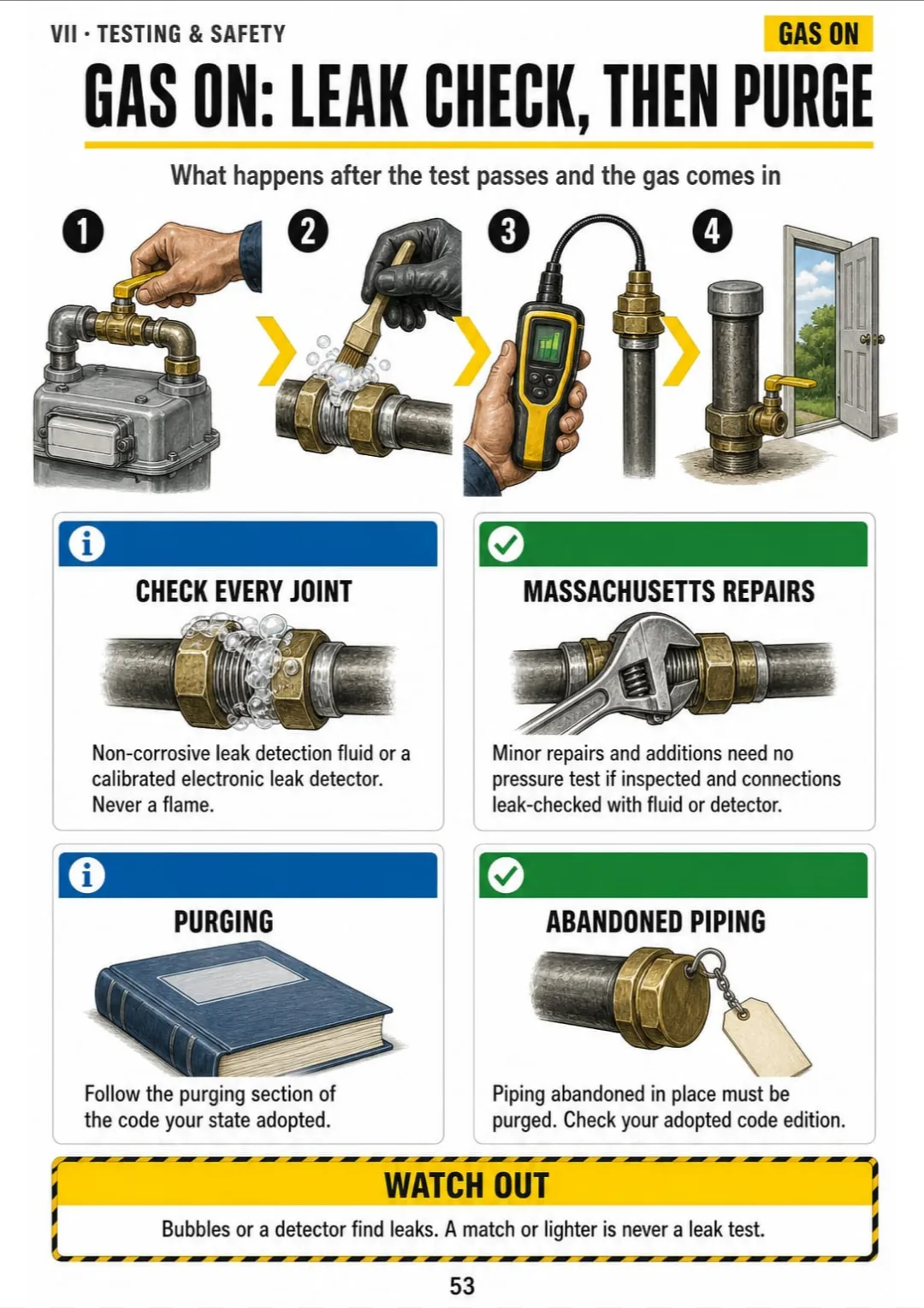
Leak check with non-corrosive fluid or an electronic detector; purge abandoned piping (2024 IFGC)
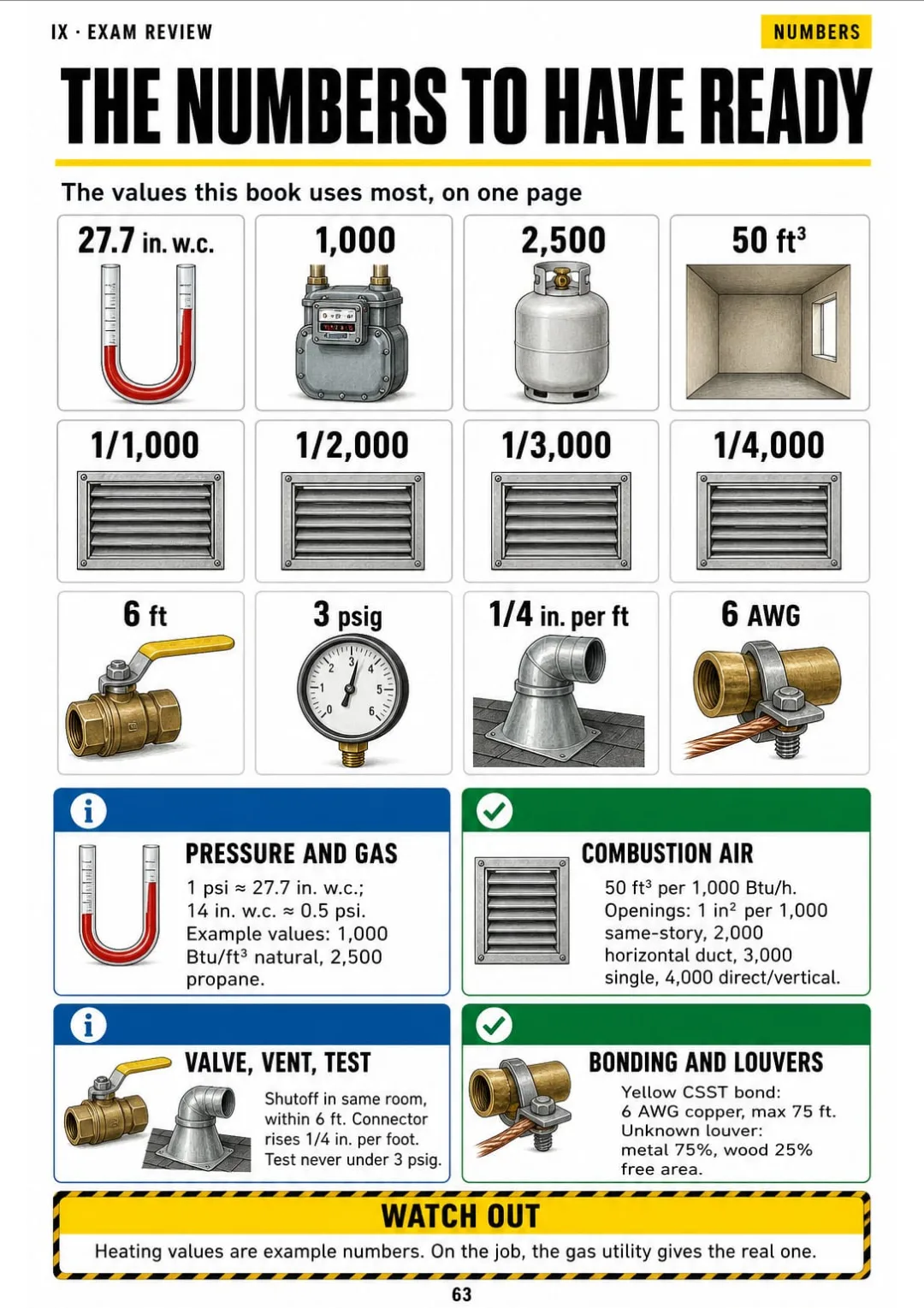
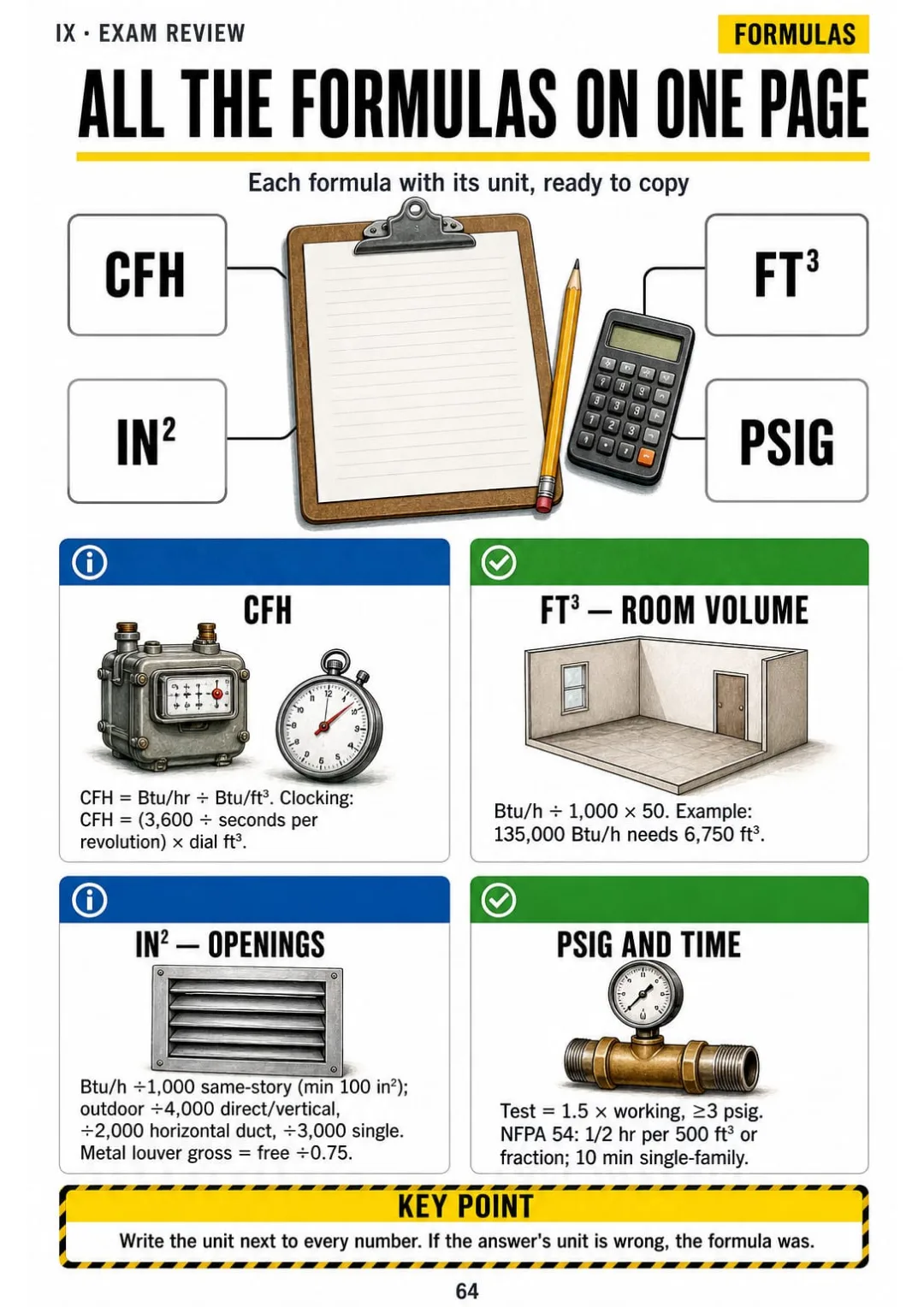
27.7 in. w.c. per psi, 50 ft³ per 1,000 Btu/h, 6 ft, 3 psig, 1/4 in. per foot.
CFH, room volume, opening size, louver area, test pressure and test time on one page.

Swipe to see more →

These are real pages from the book. The table of contents is the full one: 9 parts and 62 topics.

The Problem Isn't You. It's How It Was Explained.

You're standing in a mechanical room with a 140,000 BTU/hr furnace and two openings to the outdoors. How big does each one need to be?

You've read that section. But the code hands it to you in paragraphs: direct openings, vertical ducts and horizontal ducts, each with its ratio, all in the same block. At night, after work, they blur together.

Single outdoor opening: 1 in² per 3,000 BTU/hr, within 12 in. of the top, not smaller than the connectors.

In the book, that room is one page. The two openings are drawn, one near the ceiling and one near the floor, with the ratio next to each duct and the math already done: 35 in² each direct or vertical, 70 in² each through horizontal ducts.

And it's not only combustion air. Pipe sizing, the drip leg, Type B vent, test pressure and purging each have their own page too.

You see the drawing, you get why, and you size the openings without going back to the code book.

COMPARE FOR YOURSELF

Same Topic, Two Ways to Study It

THIS
  • The code book: line after line
  • Drip legs and fittings explained only in words
  • You walk into the exam still unsure
Unless the appliance already has one built in, a sediment trap must be fitted after the appliance shutoff valve and as close as practical to the appliance inlet, made of a tee with a capped nipple at least 3 inches long on the bottom outlet or another device recognized as effective, with certain appliances, such as ranges, clothes dryers, gas fireplaces, decorative vented appliances, illuminating appliances and outdoor grills, being exempt from the requirement.
FOR THIS
  • The drip leg in one drawing
  • The 3-inch minimum in a box
  • You see it and it makes sense
Pressure check: natural gas about 7 in. w.c. inlet, propane 11 in. w.c.; the rating plate rules.
CONTENTS

Take a Look at the 9 Parts and 62 Topics

The gas system as one run, materials and joints, pipe sizing, valves and appliance connections, combustion air, venting, testing and safety, LP-gas systems and exam review: 66 pages, all illustrated.

IThe Gas System as One Run · pp. 5-11
  1. The Route Map: Meter to Appliance
  2. Natural Gas vs. Propane at a Glance
  3. BTU/hr to CFH: The First Conversion
  4. Pressure Units: Inches of Water Column and psi
  5. Low Pressure vs. Elevated Pressure Systems
  6. Clocking a Meter
  7. Combustion in One Drawing
IIMaterials, Joints and Support · pp. 12-18
  1. Approved Pipe Materials
  2. Threaded Joints Done Right
  3. Copper Tubing and the Sulfur Limit
  4. CSST: What It Is and How It's Run
  5. Underground Piping: PE, Tracer Wire, Depth
  6. What Can't Be Hidden in a Wall
  7. Pipe Support Spacing
IIIPipe Sizing · pp. 19-27
  1. Pipe Sizing in 5 Steps
  2. Reading the Table Header First
  3. Longest Length Method
  4. Worked Example: One Straight Run
  5. Branch Length Method
  6. Worked Example: Main with Three Branches
  7. Sizing CSST with EHD
  8. 2 psi Systems: Two Tables, One Regulator
  9. Sizing Propane Piping
IVValves, Traps and Connecting the Appliance · pp. 28-33
  1. Appliance Shutoff Valve
  2. Sediment Trap (Drip Leg)
  3. Appliance Connectors
  4. Regulators and Their Vents
  5. Outlets, Caps and Unused Openings
  6. Checking Inlet and Manifold Pressure
VCombustion Air · pp. 34-40
  1. The 50 ft³ per 1,000 BTU Rule
  2. Room Volume Done Step by Step
  3. All-Indoor-Air Openings
  4. Outdoor Air: Two Openings
  5. Outdoor Air: One Opening
  6. Louvers and Grilles: Free Area
  7. When the Rules Change: Direct Vent and Mechanical Air
VIVenting · pp. 41-49
  1. Vent Categories I to IV
  2. Natural Draft and the Draft Hood
  3. Vent Connector Slope and Length
  4. Connector Clearances to Combustibles
  5. Type B Gas Vent
  6. Common Venting Two Appliances
  7. Gas Vent Termination Height
  8. Mechanical Draft Terminal Clearances
  9. Direct Vent Terminal Clearances
VIITesting, Bonding and Safety · pp. 50-56
  1. Pressure Test: How Much Pressure
  2. Pressure Test: How Long
  3. Test Medium and Gauge
  4. Leak Check and Purging
  5. CSST Bonding
  6. Gas Leak Response in Order
  7. Spillage and CO Check After the Job
VIIILP-Gas Systems (NFPA 58) · pp. 57-61
  1. DOT Cylinders vs. ASME Tanks
  2. Tank Separation Distances
  3. 80% Fill and the Relief Valve
  4. Two-Stage Regulation
  5. Propane Sinks: Where Appliances Can't Go
IXExam Review · pp. 62-66
  1. Know Your Exam and Your Code Book
  2. The Numbers to Have Ready
  3. All the Formulas on One Page
  4. The Most Frequent Mistakes on the Exam
  5. Exam Day Method

One Page, One Topic, All Clear

Think of it this way:

A customer wants a new range on the same line as the furnace and the water heater. Is the existing pipe big enough for all three?

You open the pipe sizing page and the whole run is drawn: meter, main, three branches, with the CFH of each appliance and the length you read the table with, section by section.

Test pressure: 1.5 × working pressure, never under 3 psig (IFGC 406.4.1 / NFPA 54 8.1.4)

Same with the drip leg, combustion air openings, Type B vent, test pressure and LP tank distances: each one on its own page.

Gas Fitter License Illustrated is 9 parts and 62 topics, all drawn, and at the end the key numbers, every formula on one page and an exam-day method to review.

What you see drawn, you don't have to memorize.

What's Inside Gas Fitter License Illustrated:

Ipp. 5-11

The Gas System as One Run

The route from meter to appliance, natural gas vs. propane, BTU/hr to CFH, inches of water column and psi, clocking a meter and combustion in one drawing.

IIpp. 12-18

Materials, Joints and Support

Approved pipe materials, threaded joints, copper and the sulfur limit, CSST, underground PE with tracer wire, what can't be concealed and support spacing.

IIIpp. 19-27

Pipe Sizing

Pipe sizing in 5 steps, reading the table header, longest length and branch length methods, worked examples, CSST with EHD, 2 psi systems and propane piping.

IVpp. 28-33

Valves, Traps and Connecting the Appliance

Appliance shutoff valve, sediment trap, connectors, regulators and their vents, caps on unused outlets, and checking inlet and manifold pressure.

Vpp. 34-40

Combustion Air

The 50 ft³ per 1,000 BTU rule, room volume step by step, indoor-air openings, outdoor air with one or two openings, louver free area, direct vent and mechanical air.

VIpp. 41-49

Venting

Vent categories I to IV, draft hoods, connector slope, length and clearances, Type B vent, common venting, termination height and terminal clearances.

VIIpp. 50-56

Testing, Bonding and Safety

Test pressure and test time, test medium and gauge, leak check and purging, CSST bonding, gas leak response in order and the spillage and CO check.

VIIIpp. 57-61

LP-Gas Systems (NFPA 58)

DOT cylinders vs. ASME tanks, separation distances, the 80% fill and relief valve, two-stage regulation and where propane appliances can't go.

IXpp. 62-66

Exam Review

Knowing your exam and code book, the numbers to have ready, all the formulas on one page, the most frequent mistakes and an exam-day method.

At the end of the book: Exam review with the key numbers, every formula on one page and an exam-day method.
Plus: 2 Free Books

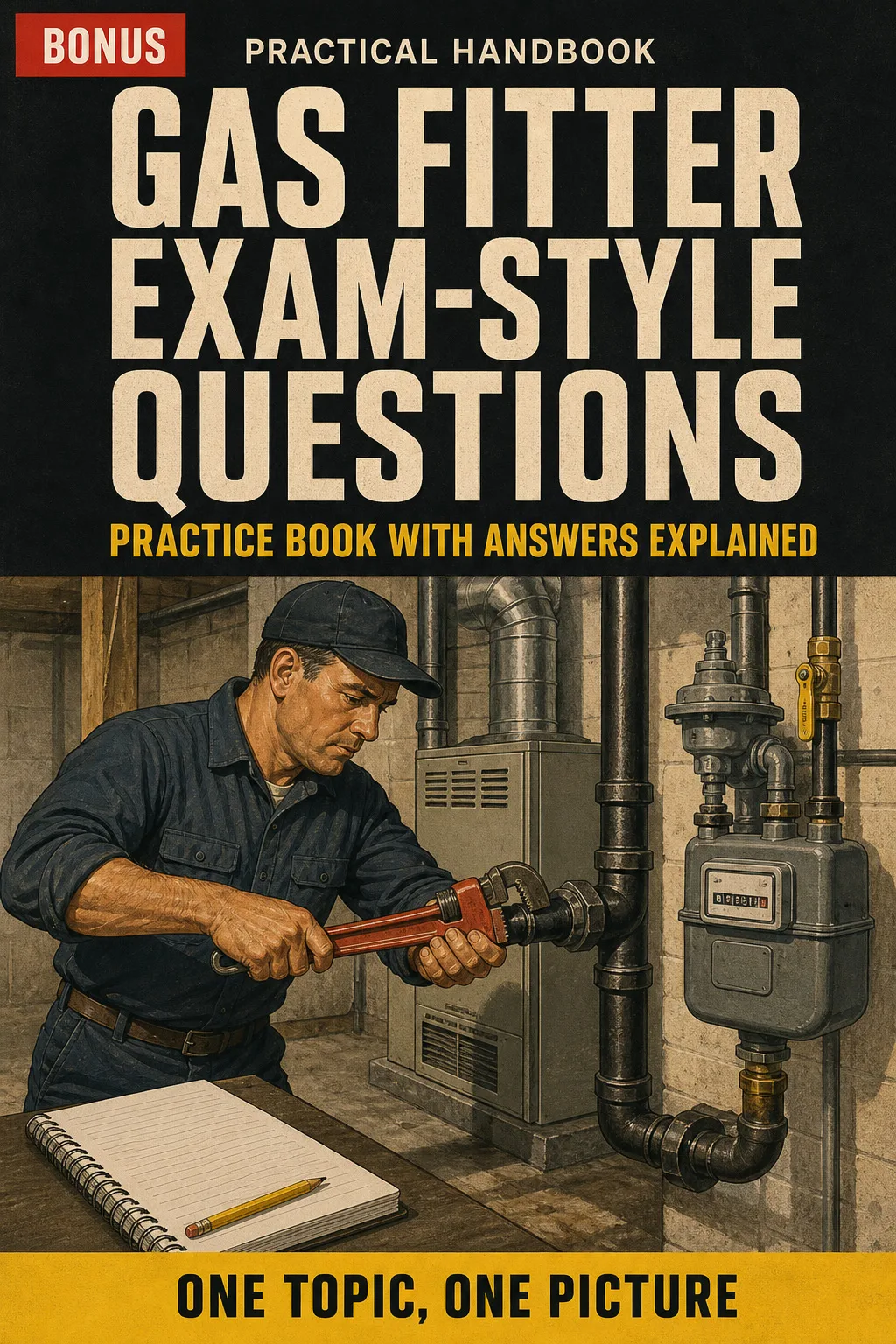
Gas Fitter Exam-Style Questions: Practice Book with Answers Explained

BONUS 1: «Gas Fitter Exam-Style Questions: Practice Book with Answers Explained»

Value on its own: US$ 17.90

Test yourself on sizing, venting, combustion air and testing, and see why each answer is right, so the real exam questions feel familiar.

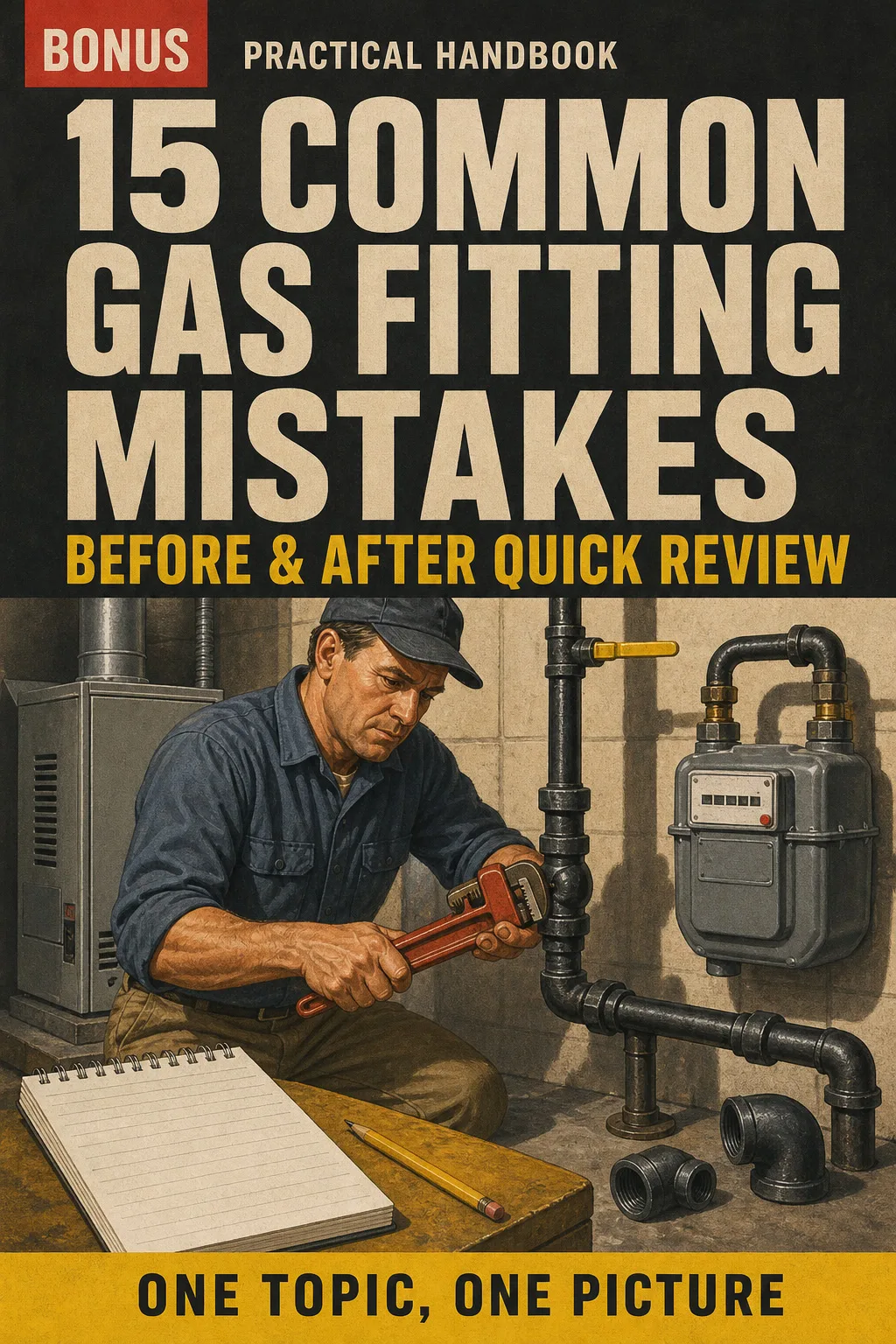
15 Common Gas Fitting Mistakes: Before & After Quick Review

BONUS 2: «15 Common Gas Fitting Mistakes: Before & After Quick Review»

Value on its own: US$ 14.90

Review the most frequent errors (missing sediment traps, wrong test gauges, undersized combustion air) side by side with the right way, in a few minutes.

Gas Fitter License Illustrated with 2 Free Books

  • Gas Fitter License Illustrated: 66 illustrated pagesUS$ 63
  • BONUS 1: Gas Fitter Exam-Style Questions: Practice Book with Answers ExplainedUS$ 17.90
  • BONUS 2: 15 Common Gas Fitting Mistakes: Before & After Quick ReviewUS$ 14.90
  • High-resolution PDF to printIncluded
Total value US$ 95.80
YOUR PRICE:
US$ 27
You save US$ 68.80
YES, I WANT GAS FITTER LICENSE ILLUSTRATED FOR US$ 27

📄 This is a digital PDF book sent to your email: nothing is printed or shipped.

Secure purchaseEncrypted payment30-day guarantee

PDF by email: We email you Gas Fitter License Illustrated as a PDF, together with the two free books. It's a single payment: no installments, no extra charges.

Who This Book Is For

You're studying for the gas license

You're studying for the gas license

Each topic of the code is one drawn page, so your evening study time goes into understanding the system instead of rereading paragraphs.

Your exam date is set

Your exam date is set

Sizing, combustion air and test pressure solved in the same steps every time, plus the numbers and formulas on one page for the last review.

You already work on gas

You already work on gas

A printable reference for the truck: drip legs, vent clearances, test pressures and purging, drawn so you can check them on the job.

Everything You Get Today

US$ 95.80US$ 27
YES, I WANT GAS FITTER LICENSE ILLUSTRATED FOR US$ 27

📄 This is a digital PDF book sent to your email: nothing is printed or shipped.

30DAYS
GUARANTEE

30-Day Guarantee

Try Gas Fitter License Illustrated for 30 days, bonus books included.

We refund everything if the file won't open, if the book isn't what you see here, if you were charged twice or if the email doesn't arrive. Just email us.

You pay once. No subscriptions.

Frequently Asked Questions

Is this for me if I've been doing gas work for years?

Yes. It isn't a beginner's book: it takes what you already do on the job and lays out the code side, sizing, combustion air, venting and testing, in drawings and in the same steps every time.

Does it match my state's exam and code?

It's built on NFPA 54 (National Fuel Gas Code), NFPA 58 (LP-Gas Code) and the International Fuel Gas Code, the model codes that state and local gas codes adopt. Each state uses its own edition and amendments, so check every value against the edition your state and your exam use.

Is this official material?

No. It's an independent study book. It isn't published or endorsed by NFPA, the ICC, PSI or any state licensing board.

Does it replace a gas fitter course or training?

No. It's a study aid, not a course: it doesn't come with a certificate and doesn't count toward the training hours, apprenticeship or field experience your state requires for the license.

Are the practice questions the ones on the exam?

No. They're written for this book, in the style of the exam, so you can test yourself. They aren't official exam questions.

When and how do I get it?

The book and the 2 bonus books arrive as PDFs by email, at the address you enter at checkout.

Do I have to pay every month?

No. It's a one-time payment. No subscription.

Can I have it on paper?

Yes. The PDF is made to print, at home or at a print shop, so you can keep it in the truck or the toolbox. For the exam itself, bring only the code books your candidate bulletin allows: this book is for studying beforehand.

How does the refund work?

You have 30 days. We refund everything if the file won't open, if the book isn't what you see on this page, if you were charged twice or if the email doesn't arrive: just email us.

Before You Close This Page

No more rereading the code with nothing sticking.

The drip leg, the openings, the vent: you see them drawn.

You walk into the exam knowing where everything is.

Drawings make studying faster.

The book is right below.

One-time payment: US$ 27 · Guarantee: 30 days · PDF by email

YES, I WANT GAS FITTER LICENSE ILLUSTRATED FOR US$ 27

📄 This is a digital PDF book sent to your email: nothing is printed or shipped.